Barbet in numbers: Hips dysplasia

barbet 276  x hipscores Barbet in numbers: Hips dysplasia

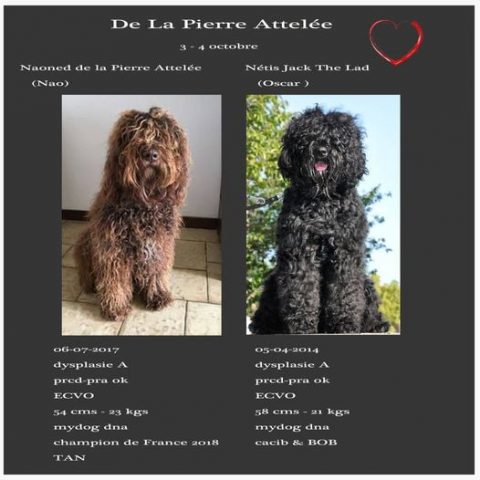
Charts above represents the results of Barbet hip scores published on sites around the web. We were able to find and collect around 420 results. Although all of those results were published by owners/clubs, or send directly to us, their credibility shouldn’t be questioned. Chart on the left indicates that around 27 % of current Barbet population was x-rayed for dysplasia. From those who where tested 73 % have healthy hips (A/A,B/B and A/B*). 27 % of tested dogs have dysplasia, 11 % of them have severe dysplasia (D or lower).

Studies show that dysplasia is heritable disease, although scientists opinion varies on details. The Finnish (1) study, which focused on effectiveness of hip-dysplasia-control-program, showed that: “Our study could not support the previous studies which found significant overall decrease in disease prevalence (Brass, 1989; Swenson et al., 1997); instead, our findings support those of the studies that found distinct between-breed variation (Fluckiger et al., 1995; Willis, 1997). The effectiveness of strong official breeding restrictions is also questionable”.  On the other hand British (2) study of dysplasia in labradors ends with several conclusions, with one most important ” the genetic heritability of that condition was significant from both sires and dams with higher heritability from sires”.

In the threatened breed like Barbet is, with a small gene pool, we should remember that “Hip-dysplasia screening and restrictive programs are also stated to cause a decrease in genetic variance (because of single-trait selection), which can lead to other more-severe problems (Bouw, 1982).“  Of course It doesn’t mean that we should stop testing hips , quite the opposite – we should test as many as we can (also by encouraging puppy buyers, who will never breed), but we have to keep in mind that:

  • B result also means that dog is healthy
  • C is acceptable in most breeds around the globe (only in breeds with very big population, acceptable values are higher – like A and B in Poland in Labrador Retriever), so careful selection of parents (history of grandparents, siblings and/or other litters) with one A/A and other C/C hips should give good results – read the British Study to find out more about predicting of hipscores
  • dysplasia is one of many traits (overall structure, coat quality, temperament etc.) we need to take under consideration while planning the litter and not the most important one (of course we speak about ABC results)
  • D results means that dog is sick, unfortunately, we can observe a big step back in one of the countries that was a pioneer in hip-control-programs, by allowing such dogs to be breed, while the bad results can and probably will occur in the progeny. Also the mating and pregnancy can cause discomfort to the dog, which should never be overloaded.

* FCI Classification of hip-dysplasia.

A Normal No signs of dysplasia
B Borderline Healthy, with slight changes in conformation
C Mild dysplasia
D Moderate dysplasia
E Severe dysplasia

To read (studies mentioned above):

1. Controlling canine hip dysplasia in Finland (EN)

2. Heritability and epidemiology of canine hip-dysplasia score and its components in Labrador retrievers in the UK (EN)

To watch:

Motion capture used to show the differences in movement between healthy and dysplastic dogs

barbet facebook Barbet in numbers: Hips dysplasia barbet twitter Barbet in numbers: Hips dysplasia barbet email Barbet in numbers: Hips dysplasia

About coat…

The Barbet’s coat is an interesting topic. Standard says:

1894 “Long, woolly and curly”

2005 “Long, woolly and curly”

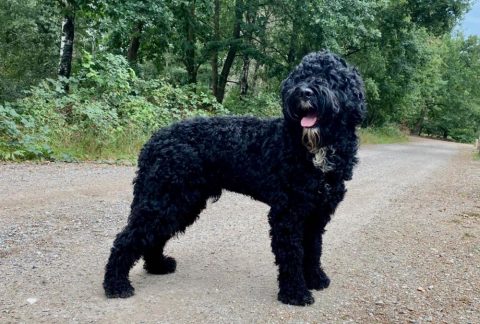
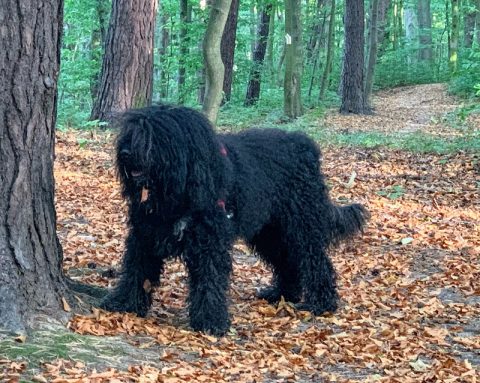
What is for sure that nothing changed in standard since 19th century. Definition of “wooly” – I don’t how precise this word is in french. In many languages You use “wooly” not only to describe wool from sheep, but in general when we talk about very dense coat (eg. from a goat). If it is woolly it doesn’t mean it has to be like sheep’s wool. Maybe our vision of “woolly ,curly and long” is formed by the dogs we have seen. Standard didn’t change, dogs did. To get the view of how “long, wooly curly” coat looked like and should be interpreted now, You can look at historical photos of Mas de Chapelle barbet’s taken in 30′s. Quick look at those photos should direct to some simple and easy conclusions on coat.

My experiences with Barbet’s coat are like that. It is a big simplification. But I have seen two basic types of coat.

1. Coat curly, but not tight, not frizzy, very dense and wooly  and very long and easy to maintain although it also matts if it is not brushed regularly. Well oiled, excellent for work in water or dirty areas. It is the coat that after coming from forest You can take a water hose and clean the dog. This is the coat presented in barbets from Poppenspaler or di Barbochos kennels, and it resembles the Mas de Chapelle types of coat. It is such a coat that if is not brushed it becomes thick (tangled?) but not mated. And this moment, when such a coat becomes a little tangled – it works like it should. I think this is the best kind of coat that barbet could have (I would use the word quintessence of Barbet’s coat), the coat that hunters from 19/20 century had in their dogs, they would not afford the dog that would need brushing and clenaing after every trip to forest.. You can always take a comb and easily brush it to the point that You will able to see the skin again, and then left it to become tangled again. It can be rarely brushed and it takes long time without brushing to became really mated and You still will be able to work it out without cutting.

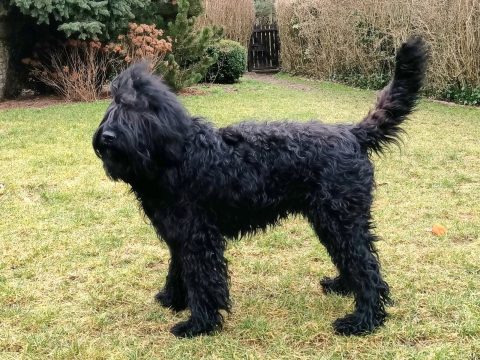
2. Other type is a very curly coat, frizzy. Many dogs have that kind of coat it is a nightmare for their owners. Every time I meet people at dog shows, they want to know how to deal with it. This is the kind of coat that if left un brushed for a month or two may be only cut/shaved off. It mats very quickly, it keeps dirt (water and heat) inside too. Many owners of such dogs cut it regularly even if they are not working, because this coat is too hard to maintain even at home. The degeneration of coat led us to the point in which it is unable to keep it long and clean even in “home” environment, not to mention hunting or working in general. And it is not a question of owner’s laziness. I have people who are willing to travel 200 km in one way only to show me the dog, and ask if it is possible to save his coat. And of course the longer it gets the harder it is to maintain. That is why when you go to many websites around the internet, the dogs’ coats are cut short. Because that type of coat will never grow long to form strands and this type of coat is unable to be maintained.

While talking about coat, we have to remember that barbet is a hunting dog which is supposed to work in certain environment. By the environment I mean : cold water, marshes, dirt and mud. The coat must protect the dog and help him in his work. Only first type of coat meets those requirements.

barbet facebook About coat... barbet twitter About coat... barbet email About coat...